
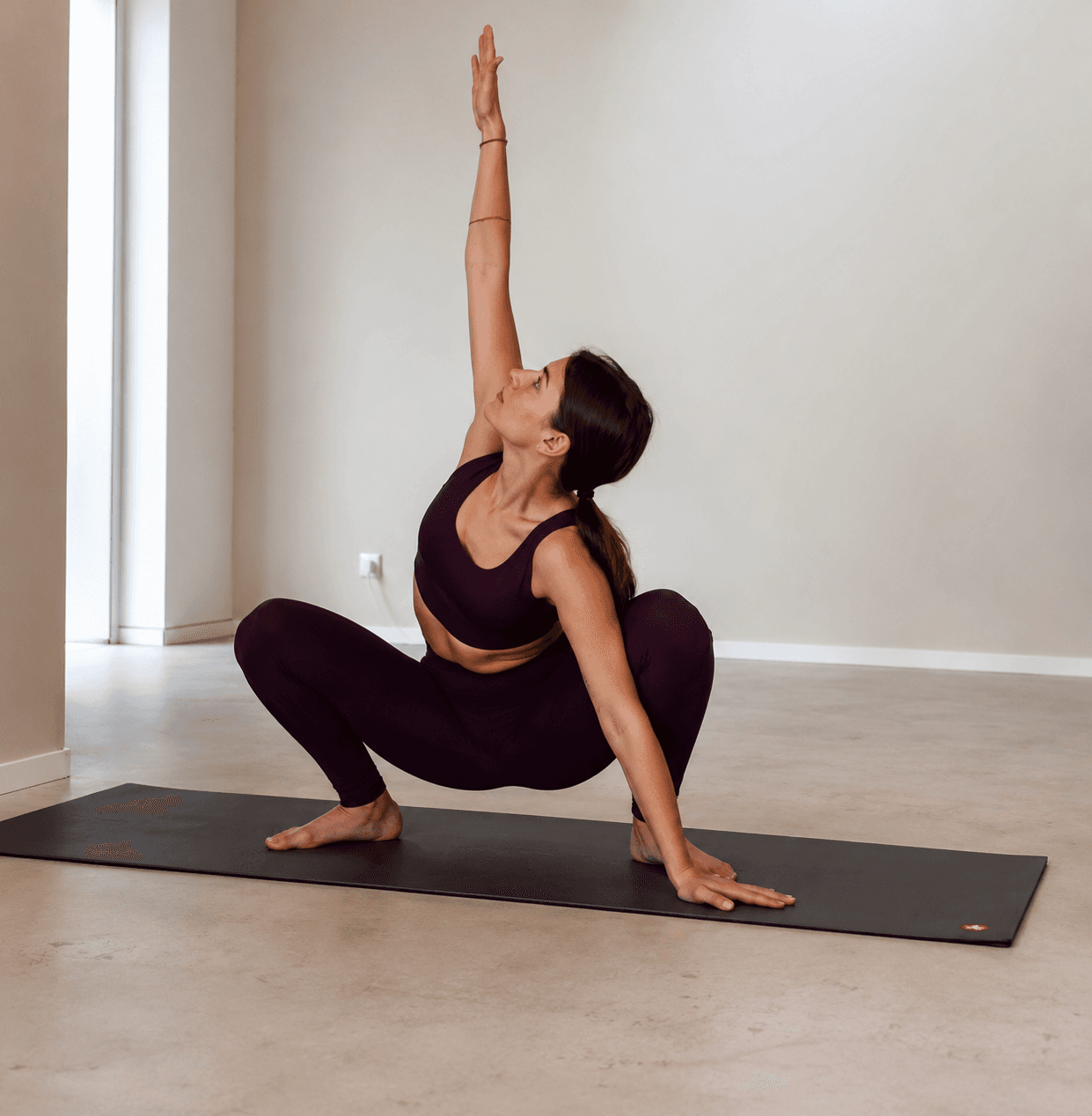
Some yoga poses look impressive. Others quietly become the foundation of a strong, healthy body.
Malasana, or Garland Pose (often called the Yogi Squat), is one of those foundational poses. While it may seem simple, it's a powerful posture that improves mobility, builds strength, enhances posture, and helps us reconnect with one of the most natural human movement patterns: the squat.
At LX Portal Yoga, Malasana is our August Pose of the Month, giving our community the opportunity to revisit the pose throughout the month and experience how consistent practice leads to meaningful progress.
More Than Just a Stretch
Many of us spend hours each day sitting in chairs, which can lead to tight hips, stiff ankles, and reduced mobility over time.
Malasana gently reverses these effects by encouraging a deep squat position that opens the hips, lengthens the lower back, and improves mobility throughout the lower body.
With regular practice, you may notice:
- ◆Improved hip, ankle, and groin mobility
- ◆Greater flexibility in the lower back
- ◆Better posture and spinal alignment
- ◆Increased core stability
- ◆Improved balance and body awareness
- ◆Easier movement in everyday activities
The Importance of Pelvic Strength
One of the lesser-known benefits of Malasana is the way it strengthens and supports the muscles of the pelvic floor.
The pelvic floor works together with your deep abdominal muscles, diaphragm, and lower back to create a stable core. Rather than simply stretching these muscles, Malasana encourages them to lengthen and engage in a balanced way, improving coordination and control.
A healthy, responsive pelvic floor contributes to:
- ◆Better core stability
- ◆Improved posture
- ◆Greater balance
- ◆More efficient breathing
- ◆Better support during lifting and everyday movement
Because the pose requires you to stabilize your body close to the ground, it also teaches your body how to generate strength from your hips and core instead of relying solely on your knees or lower back.
Why Being Able to Stand Up From a Squat Matters
One of the simplest ways to assess functional strength is to ask: Can you comfortably stand up from a deep squat?
It may sound basic, but this movement reflects the strength, mobility, and coordination we rely on every day.
Whether you're picking something up from the floor, playing with children, gardening, hiking, or simply getting up from a low seat, the ability to move smoothly from a squat to standing is a key indicator of healthy movement.
Practicing Malasana helps develop:
- ◆Leg and glute strength
- ◆Hip mobility
- ◆Ankle flexibility
- ◆Core control
- ◆Balance and coordination
These are all essential ingredients for maintaining independence and reducing the risk of falls and injuries as we age.
How to Practice Malasana
- 1.Stand with your feet slightly wider than hip-width apart, with your toes turned out comfortably.
- 2.Slowly lower your hips toward the floor into a deep squat.
- 3.Bring your palms together at your heart.
- 4.Gently press your elbows against the inside of your knees to encourage the hips to open.
- 5.Lengthen through your spine and lift your chest without overarching your lower back.
- 6.Keep your gaze relaxed and breathe slowly.
Hold for several breaths before slowly coming back to standing.
It's Okay if Your Heels Lift
One of the biggest misconceptions about Malasana is that everyone should be able to place both heels flat on the floor.
In reality, ankle mobility varies greatly from person to person. If your heels naturally lift, there's nothing wrong with that.
At LX Portal, our teachers will help you find a variation that works for your body. You might:
- ◆Place a folded blanket or yoga wedge under your heels
- ◆Widen your stance slightly
- ◆Sit on a yoga block for support
- ◆Focus on maintaining a long spine rather than squatting as low as possible
Yoga is never about forcing your body into a shape—it's about meeting yourself where you are and progressing safely.
Progress Happens Through Practice
The beauty of revisiting the same pose over several weeks is that small improvements begin to add up.
Perhaps your hips feel a little more open. Your heels move a little closer to the floor. Standing up feels smoother. Or maybe you simply feel more confident exploring a pose that once felt challenging.
These are the kinds of changes that often go unnoticed in a single class but become obvious over time.
That's exactly why we've introduced Pose of the Month at LX Portal Yoga—to create space for learning, exploration, and steady progress.
This August, join us as we explore Malasana together. Whether it's your first yogi squat or your hundredth, we'll help you build the strength, mobility, and confidence that extend far beyond the mat.